
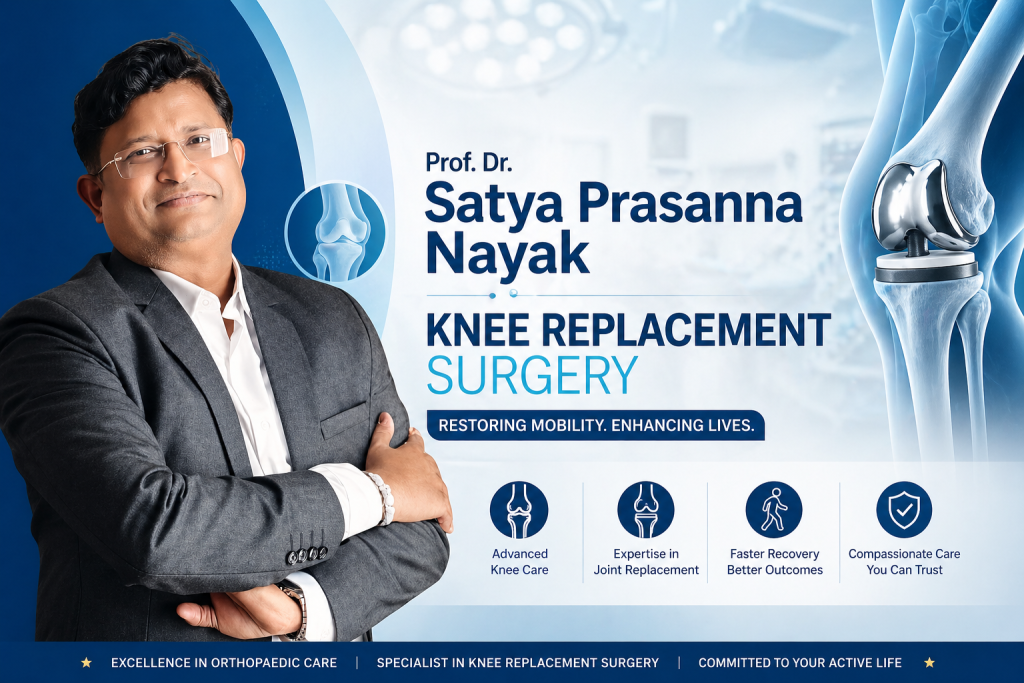
Author: Dr. Satya Prasanna Nayak — Orthopedic & Joint Replacement Surgeon Hospital: Om Suvam Hospital, Ranihat Canal Road, College Square, Cuttack, Odisha Last updated: April 25, 2026 | Reading time: 11 minutes Medically reviewed by: Prof Dr. Satya Prasanna Nayak, MBBS, MS (Orthopedics)
Knee replacement surgery is a procedure in which a damaged knee joint is replaced with a metal-and-polyethylene implant to relieve pain and restore mobility. At Om Suvam Hospital, Prof Dr. Satya Prasanna Nayak performs Total Knee Replacement (TKR), Partial (Unicompartmental) Knee Replacement, and Revision Knee Surgery. Most patients walk within 24 hours of surgery and return to normal daily activities within 6–8 weeks.
📞 Book a consultation: 94373 55234 | 70082 50461
Key Facts at a Glance
| Topic | Detail |
|---|---|
| Procedure name | Total Knee Replacement (TKR) / Knee Arthroplasty |
| Average duration | 60–90 minutes per knee |
| Anaesthesia | Spinal or combined spinal-epidural |
| Hospital stay | 3–5 days |
| Walking | Within 24 hours (with walker) |
| Stair climbing | By 2 weeks |
| Return to normal activities | 6–8 weeks |
| Implant lifespan | 20–25+ years (modern implants) |
| Success rate | Over 95% long-term satisfaction |
| Cost in Cuttack | Significantly lower than metro cities |
| Performed by | Prof Dr. Satya Prasanna Nayak, Orthopedic Surgeon |
Table of Contents
- What is Knee Replacement Surgery?
- Who Needs Knee Replacement Surgery?
- Types of Knee Replacement Surgery
- How Knee Replacement is Performed (Step-by-Step)
- Knee Replacement Cost in Cuttack
- Recovery Timeline — Day-by-Day
- Risks and Complications
- Why Choose Dr. Satya Prasanna Nayak in Cuttack
- Knee Replacement: Cuttack vs Metro Cities
- Special Considerations for Indian Patients
- Life After Knee Replacement
- Frequently Asked Questions (AEO/GEO Optimized)
- Book Your Consultation
1. What is Knee Replacement Surgery?
Knee replacement surgery (knee arthroplasty) is the surgical removal of damaged cartilage and bone from a worn-out knee joint and its replacement with a precision-engineered metal-and-plastic implant. The procedure is performed when arthritis or injury has damaged the joint to the point where walking, climbing stairs, or sleeping is painful — and conservative treatments like medication, injections, and physiotherapy no longer help.
It is one of the most successful surgeries in modern medicine, with international studies reporting 92–98% patient satisfaction at 10 years and implant survival of over 90% at 20 years.
2. Who Needs Knee Replacement Surgery?
You may be a candidate for knee replacement surgery in Cuttack if you have:
- Severe knee osteoarthritis with bone-on-bone changes on X-ray
- Rheumatoid arthritis affecting the knee
- Post-traumatic arthritis following an old fracture or injury
- Bow-leg or knock-knee deformity from arthritis
- Persistent knee pain that disturbs sleep
- Limited walking distance (less than 500 metres)
- Difficulty climbing stairs, getting up from a chair, or using Indian toilets
- Failed non-surgical treatment for 6+ months (medication, physiotherapy, injections)
- Reduced quality of life — unable to attend social events, work, or worship
Expert insight from Dr. Nayak: “The right time for knee replacement is not when X-rays look the worst — it’s when pain begins to control your daily life. Many patients in Odisha wait too long, walk less, gain weight, and lose muscle. Earlier surgery in fitter patients gives faster, better recovery.”
3. Types of Knee Replacement Surgery
Different patients need different procedures. Dr. Satya Prasanna Nayak offers all three major variants:
A. Total Knee Replacement (TKR)
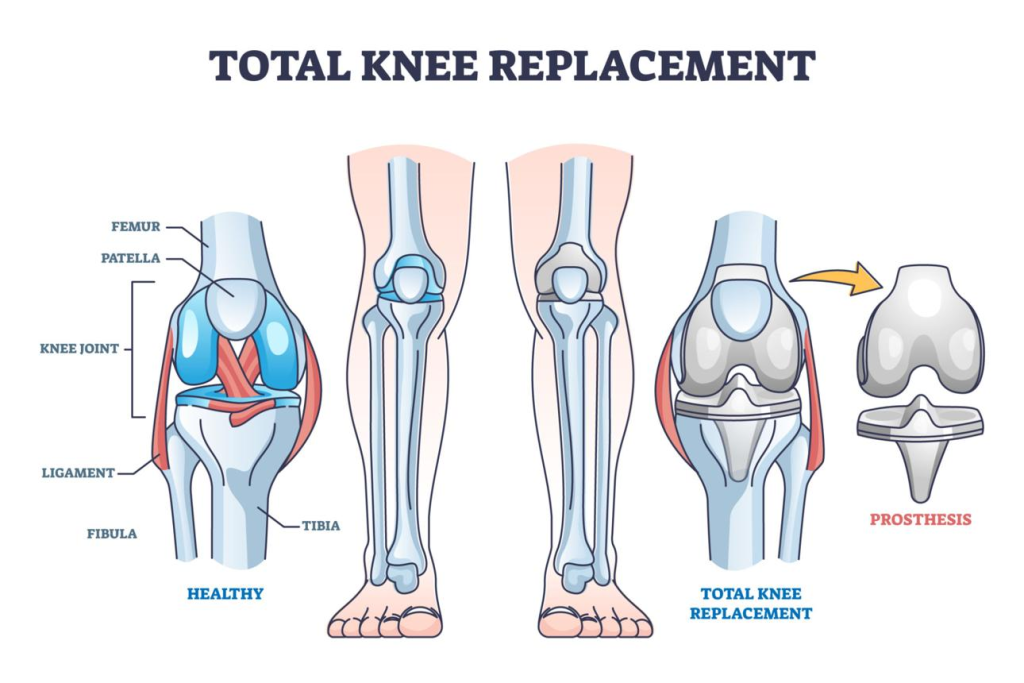
The most common procedure. The entire knee joint surface is replaced with an implant. Best for advanced arthritis affecting all three knee compartments.
B. Partial (Unicompartmental) Knee Replacement
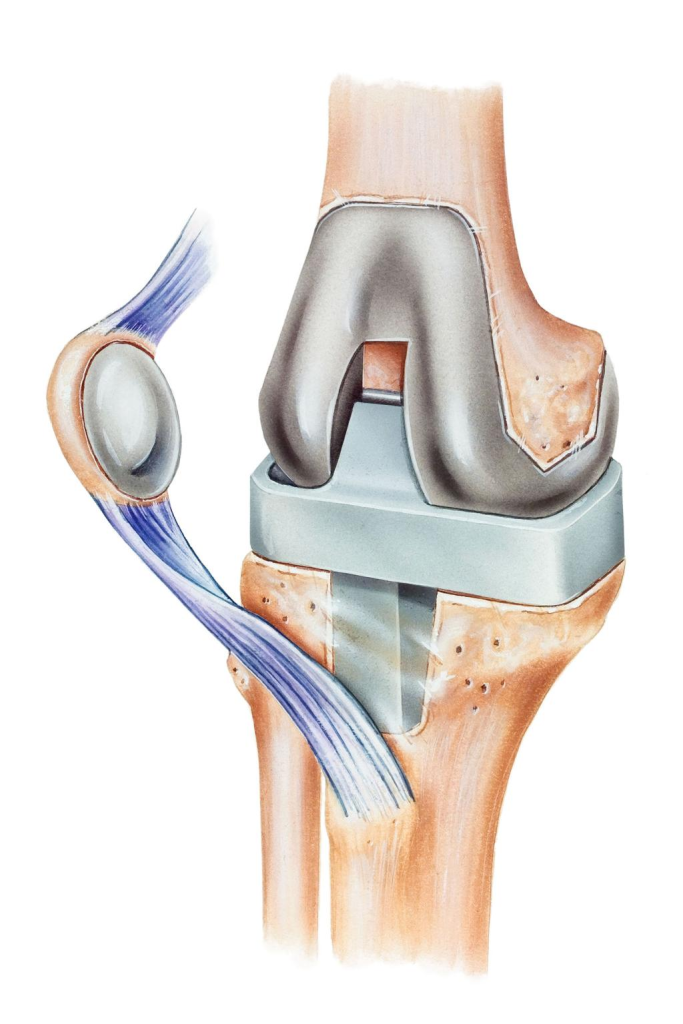
Only the damaged compartment is replaced, preserving healthy bone and ligaments. Best for early-stage arthritis affecting only one side of the knee. Smaller incision, faster recovery, more natural feel.
C. Bilateral Knee Replacement
Both knees replaced — either in one surgery (single anaesthesia) or staged a few weeks apart. Suited for fit patients with arthritis in both knees.
D. Revision Knee Replacement
Replacement of a previously implanted knee that has failed due to wear, infection, or loosening. A complex surgery requiring specialized expertise.
E. Computer-Assisted / Navigation Knee Replacement
Uses real-time computer guidance for precise alignment — improving longevity and balance of the implant.
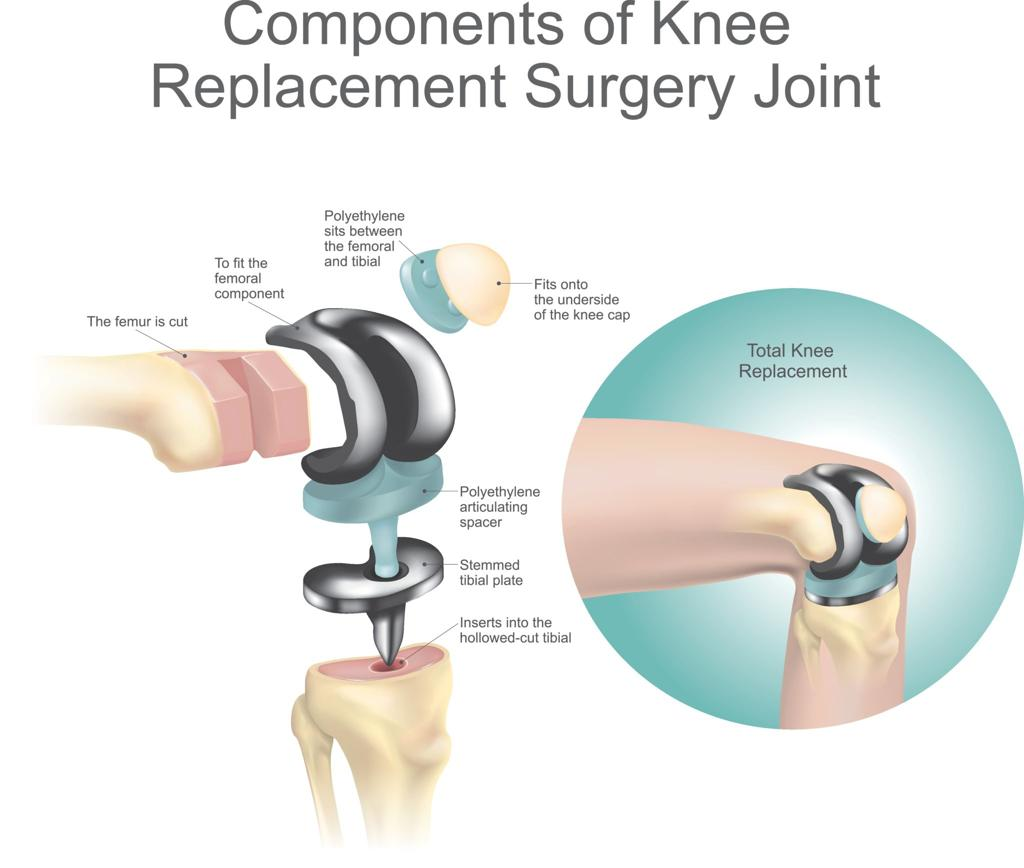
4. How Knee Replacement is Performed (Step-by-Step)
A clear understanding of the procedure helps reduce anxiety. Here is what happens during knee replacement surgery:
- Pre-operative evaluation — blood tests, ECG, anaesthetic review, dental check, X-rays, scanograms.
- Admission — usually one day before surgery.
- Anaesthesia — most patients receive spinal anaesthesia (awake but pain-free below the waist).
- Surgical incision — a vertical incision on the front of the knee (~15–20 cm).
- Removal of damaged surfaces — worn cartilage and a thin layer of bone are precisely cut.
- Implant placement — femoral, tibial, and patellar components are fixed with bone cement.
- Soft tissue balancing — ligaments are balanced for natural movement.
- Closure — incision closed in layers; sterile dressing applied.
- Recovery room — vital signs monitored for 1–2 hours.
- Same-day mobilization — most patients sit up and even stand within hours.
5. Knee Replacement Treatment & Cost in Cuttack
One of the biggest advantages of having knee replacement surgery in Cuttack is affordability without compromising quality.
Knee replacement cost in Cuttack varies based on:
- Type of implant (standard, high-flexion, hi-cross-linked polyethylene, ceramic)
- Brand of implant (Indian, Korean, US/European)
- Surgical approach (conventional, computer-assisted)
- Single or both knees
- Hospital category and room type
- Pre-existing medical conditions
- Insurance / cashless availability
For a transparent, personalized cost estimate, please call 94373 55234. Dr. Nayak’s team provides a complete written breakdown — no hidden charges.
Insurance: Most health insurance policies and Ayushman Bharat / BSKY (Biju Swasthya Kalyan Yojana) cover knee replacement at empanelled hospitals. Please confirm coverage at the time of consultation.
6. Recovery Timeline — Day-by-Day
Here is the typical recovery roadmap after knee replacement surgery in Cuttack:
| Time | Milestone |
|---|---|
| Day 0 (Surgery Day) | Spinal anaesthesia worn off; standing with walker |
| Day 1 | Walking 5–10 metres with walker; physiotherapy begins |
| Day 2 | Walking longer distances; toilet use independently |
| Day 3–5 | Hospital discharge; home physiotherapy begins |
| Week 1 | Walking with walker indoors; bending knee 60–80° |
| Week 2 | Walking with stick; stitches removed; bending 90–100° |
| Week 4 | Walking without support; climbing stairs |
| Week 6 | Resume light office work, driving (after surgeon clearance) |
| Month 3 | Most daily activities fully resumed |
| Month 6 | Full strength and confidence restored |
| Year 1 | Implant fully integrated; lifelong follow-up begins |
7. Risks and Complications
Every surgery carries some risk. Modern knee replacement is very safe, but patients should be aware of potential complications:
- Infection (under 1% with strict protocols)
- Blood clots (DVT) — prevented with blood thinners
- Stiffness or limited bending
- Implant loosening over decades
- Nerve or blood vessel injury (rare)
- Anaesthesia-related risks
- Need for revision surgery in distant future
Dr. Nayak follows international protocols including pre-operative screening, antibiotic prophylaxis, DVT prevention, and structured rehabilitation to minimize these risks.
8. Why Choose Dr. Satya Prasanna Nayak in Cuttack
Choosing the best knee replacement surgeon in Cuttack is not just about the cheapest quote — it’s about long-term outcomes.
What sets Dr. Satya Prasanna Nayak apart:
- ✅ Comprehensive joint replacement expertise — TKR, partial, bilateral, and revision surgeries
- ✅ High-volume orthopedic practice at Om Suvam Hospital, Cuttack
- ✅ Modern protocols matching metro-city standards
- ✅ Honest second opinions — surgery only when truly justified
- ✅ Affordable, transparent pricing with no hidden charges
- ✅ Patient-first communication — every step explained in plain language
- ✅ Long-term follow-up culture for implant health
- ✅ Trusted by patients across Odisha — Cuttack, Bhubaneswar, Jajpur, Kendrapara, Jagatsinghpur, Puri, Balasore, Angul, Dhenkanal
9. Knee Replacement: Cuttack vs Metro Cities
| Factor | Metro Cities (Delhi/Mumbai/Bangalore) | Cuttack (Om Suvam Hospital) |
|---|---|---|
| Surgery quality | International standard | International standard |
| Implants used | Same global brands | Same global brands |
| Surgeon expertise | High-volume specialists | High-volume specialists |
| Cost | Significantly higher | Significantly lower |
| Travel & stay | Major hidden cost | None for Odisha residents |
| Family support | Difficult during recovery | Family stays close throughout |
| Post-op follow-up | Travel needed | Easy local visits |
| Language barrier | Common | None — Odia & Hindi spoken |
| Insurance acceptance | Yes | Yes (cashless available) |
For most Odisha patients, getting knee replacement surgery in Cuttack is the smarter choice — same outcome, lower cost, easier recovery.
10. Special Considerations for Indian Patients
Indian lifestyles place unique demands on the knee — squatting, sitting cross-legged, using Indian-style toilets, and praying on the floor. Standard Western implants are not always optimized for these movements.
Dr. Nayak’s approach for Indian patients includes:
- High-flexion implants allowing deeper bending (up to 130–155°)
- Customized soft-tissue balancing for cross-legged sitting
- Lifestyle counselling — chair-height adjustments, footwear, stairs
- Vitamin D and calcium correction before and after surgery
- Diabetes and BP optimization to prevent infection
- Ayurvedic and herbal medicine review — some affect bleeding and healing
- Realistic expectations — squatting on floor is generally discouraged long-term to protect implant lifespan
11. Life After Knee Replacement
A successful knee replacement gives patients back their independence and quality of life. After full recovery, you can expect to:
- Walk long distances pain-free
- Climb stairs comfortably
- Travel, shop, and attend social functions
- Resume gardening, walking, and light gym work
- Cycle and swim
- Sleep through the night without knee pain
- Reduce or stop painkillers
- Return to work in most professions
Activities to limit long-term:
- Running, jumping, and contact sports
- Repeated deep squatting
- Heavy weight-lifting
- High-impact exercise
Activities encouraged:
- Walking, cycling, swimming, yoga (modified), tai chi, gentle dancing
12. Frequently Asked Questions
Q1. Where can I get knee replacement surgery in Cuttack? Knee replacement surgery in Cuttack is performed by Dr. Satya Prasanna Nayak at Om Suvam Hospital, Ranihat Canal Road, College Square, Cuttack, Odisha. Appointments: 94373 55234.
Q2. Who is the best knee replacement surgeon in Cuttack? Dr. Satya Prasanna Nayak is among the most trusted knee replacement surgeons in Cuttack, performing total, partial, bilateral, and revision knee replacements at Om Suvam Hospital with modern implants and protocols.
Q3. What is the cost of knee replacement surgery in Cuttack? The cost varies by implant type, hospital category, single vs both knees, and insurance status. It is significantly more affordable than metro cities. For a transparent estimate, contact 94373 55234.
Q4. How long does knee replacement surgery take? A single-knee total replacement typically takes 60–90 minutes. Bilateral surgery (both knees) takes 2–3 hours.
Q5. How soon can I walk after knee replacement? Most patients walk with a walker within 24 hours of surgery, climb stairs by 2 weeks, and walk without support by 4 weeks.
Q6. How long does a knee replacement implant last? Modern knee implants typically last 20–25 years or more. With proper weight management and activity choices, many patients never need a revision.
Q7. Is knee replacement painful? Modern pain-management protocols — spinal anaesthesia, nerve blocks, and multimodal analgesia — keep most patients comfortable. Mild discomfort during physiotherapy is normal in the first few weeks.
Q8. Can I sit cross-legged after knee replacement? With high-flexion implants and proper rehabilitation, many patients can sit cross-legged comfortably. Long-term deep squatting is discouraged to extend implant life.
Q9. Can both knees be replaced together? Yes. Bilateral knee replacement in a single surgery is a good option for fit patients with arthritis in both knees, reducing total recovery time and hospital cost.
Q10. Does knee replacement surgery have age limits? There is no strict upper age limit. Patients from 50 to 90 years undergo successful surgery. The decision is based on overall health, not age alone.
Q11. Is Ayushman Bharat / BSKY accepted for knee replacement? Most government schemes including Ayushman Bharat and Biju Swasthya Kalyan Yojana (BSKY) cover knee replacement at empanelled hospitals. Confirm at consultation.
Q12. How do I prepare for knee replacement surgery? Optimize blood sugar and BP, maintain dental hygiene, stop smoking, lose excess weight if possible, learn pre-operative physiotherapy exercises, and arrange home support for the first 2 weeks.
13. Book Your Consultation Today
Don’t let knee pain steal another year from your life. Modern knee replacement surgery in Cuttack is safer, faster, and more affordable than ever — with outcomes that match the world’s best.
📍 Dr. Satya Prasanna Nayak
Orthopedic & Joint Replacement Surgeon Om Suvam Hospital, Ranihat, Canal Road, College Square, Cuttack, Odisha — India
📞 Appointments: 94373 55234 / 70082 50461 📧 Email: drsatyapnayak@gmail.com 🌐 Website: drsatyaprasannanayak.com
Connect on Social Media: Facebook • Instagram • LinkedIn • X/Twitter
Other Treatments: Hip Replacement • Sports Injury • Back Pain • Complicated Trauma
Disclaimer: This article is for educational purposes only. It does not substitute professional medical consultation, diagnosis, or treatment.